.png)
SeattleFWC26, Governor, Executive, Mayor and Transportation Partners Share "Know Before You Go" Info Ahead of FIFA World Cup 2026™

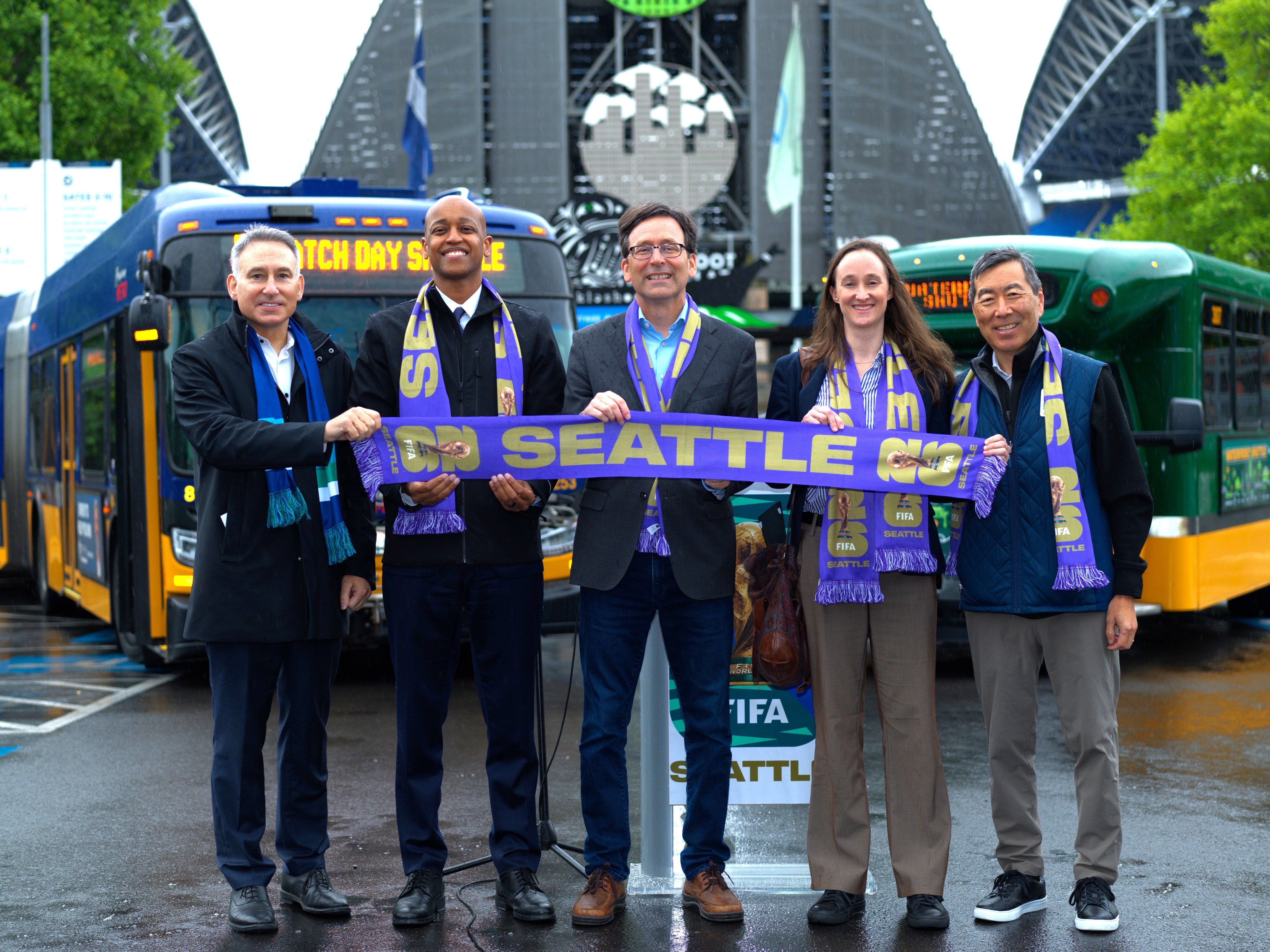
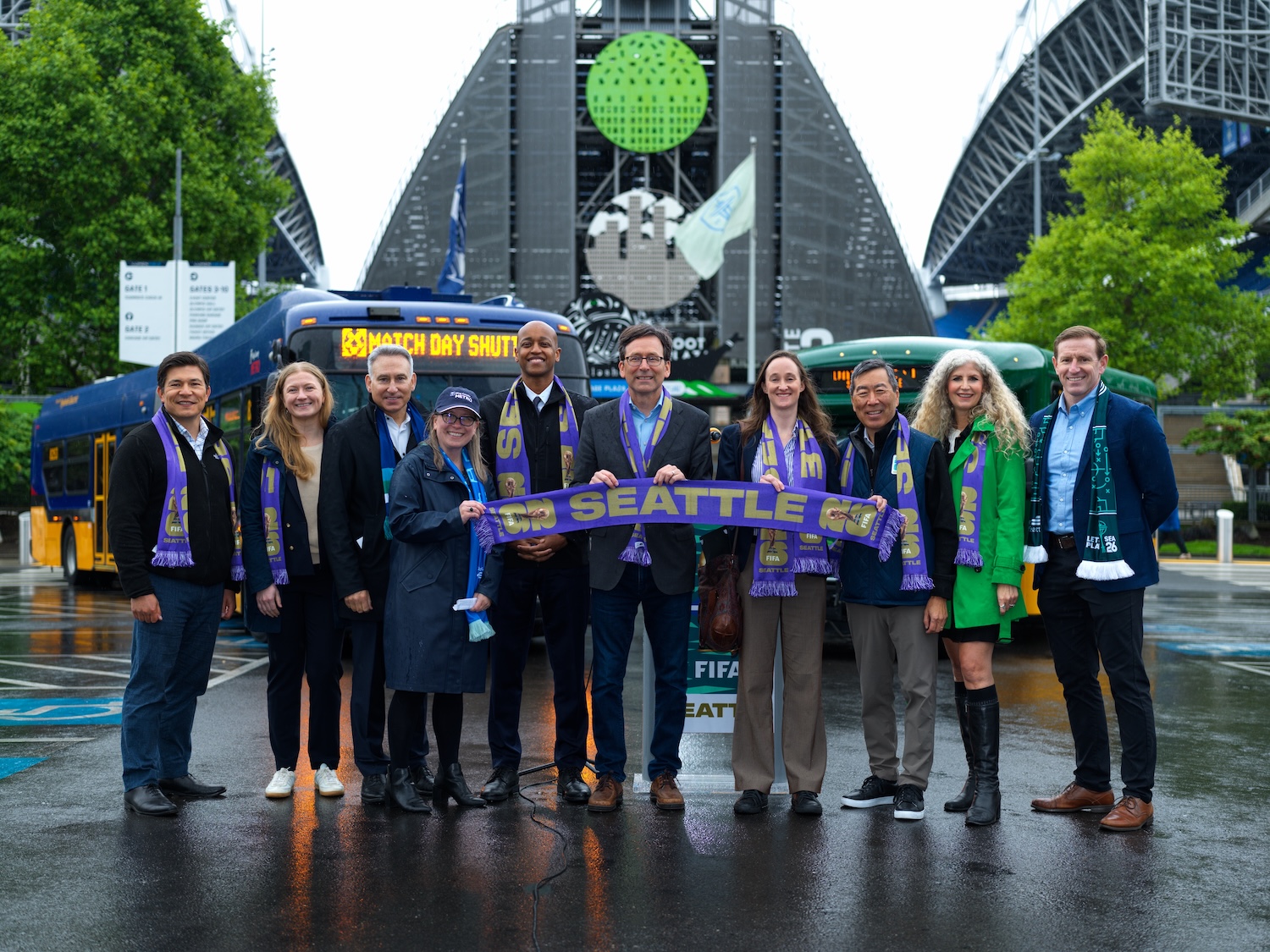
SEATTLE, WA – With 33 days until Seattle’s FIFA World Cup 2026™ match kicks off in Seattle, SeattleFWC26 and First & Goal, Inc. were joined by Governor Bob Ferguson, King County Executive Girmay Zahilay, Seattle Mayor Katie B. Wilson, Sound Transit CEO Dow Constantine, and leaders from the Washington State Department of Transportation (WSDOT), King County Metro, Port of Seattle, and the Seattle Department of Transportation (SDOT) for a regional “Know Before You Go” event to preview matchday transportation plans.
Seattle Stadium will host six FIFA World Cup 2026™ matches on June 15, June 19, June 24, June 26, July 1 and July 6. Four official Seattle Fan Celebration sites have been announced at Pacific Place, Seattle Center, Victory Hall, and Waterfront Park. Hundreds of thousands of fans are expected to visit the region to attend matches, as well as visit the Seattle Fan Celebrations and countless unofficial events throughout the region.
The message to fans is simple: plan ahead and take transit. On match days, downtown Seattle will be one of the most transit-rich environments in the city’s history, and Seattle Stadium will be easiest to reach by light rail, bus, foot, bike, and water. With one of the most walkable and transit-accessible stadiums across the tournament, 80% of fans are expected to arrive at Seattle Stadium without a personal vehicle.
“Seattle Stadium is positioned to be the most accessible venue in the FIFA World Cup 2026,” said CEO of SeattleFWC26 Peter Tomozawa. “Whether you're a local, or a visitor arriving from across the globe, getting to the match can be one of the best parts of the experience — no car required. Our regional partners have put extraordinary work into this plan, and it’s never been more convenient to get around our city.
"I'm proud, but not surprised, that Seattle was selected out of dozens of potential World Cup host cities," said Governor Bob Ferguson. "There's intense competition to host these games, and Washington state was chosen for a reason. Fans will save time and money with an accessible, downtown stadium and great public transportation across the region, from light rail to our iconic ferries. We’re excited to share Washington state and Seattle with the world."
“King County is proud to help welcome the world to our region while continuing to deliver reliable service for the people who call this place home,” said King County Executive Girmay Zahilay. “Metro’s match day and waterfront shuttles, expanded transit service, and regional coordination will help residents and fans move easily throughout Seattle and across King County. Whether you’re heading to a match, commuting to work, or simply getting where you need to go during one of the busiest summers in our history, I encourage residents and visitors alike to leave the driving to us and take advantage of the many transit options available to keep people moving.”
“We’re getting ready to welcome the world to Seattle, and a huge part of that experience is how people move through the city,” said Seattle Mayor Katie B. Wilson. “This summer is an opportunity to show what’s possible when a regional transit network works together, with buses, light rail, and ferries all helping people get where they need to go safely and easily. We want residents and visitors to know Seattle is connected, accessible, and ready.”
Transportation agencies across the region have coordinated a matchday plan that builds on decades of game-day operations—plus lessons from major events including the 2026 Seattle Seahawks Super Bowl Victory Parade, 2023 MLB All-Star Week, and Taylor Swift concerts. Fans should expect frequent transit service, clear wayfinding, and dedicated shuttles designed to move large crowds quickly into and out of downtown. Details for each mode and match day are outlined below.
Traveling during World Cup: What Fans Need to Know
Free shuttles available for fans traveling within Downtown Seattle
King County Metro will operate a dedicated Match Day Shuttle on each of Seattle’s six match days. The shuttle runs between Seattle Center and Seattle Stadium, primarily on Third Avenue. Service starts three hours before kickoff, increases to a bus every three minutes in the hour before the match, and continues for three hours after the final whistle. After the match, buses will depart using a load-and-go model. The Matchday Shuttle provides easy connections to the official Fan Celebrations planned at Seattle Center, Pacific Place, and Victory Hall.
Beginning May 21 through Labor Day, King County Metro will also operate a Waterfront Shuttle connecting Seattle Center, Waterfront Park, Pioneer Square, Seattle Stadium, and the Chinatown-International District. The Waterfront Shuttle provides easy connections to the Seattle Fan Celebrations planned at Seattle Center, Waterfront Park, and Victory Hall.
“Thanks to our new shuttles and boosts in bus service, it’s going to be easier than ever to take transit to popular downtown Seattle destinations this summer – whether you are a resident or a soccer fan coming for the big matches,” said King County Metro General Manager Michelle Allison. “We’re ready to host the world, counting down the days, and our drivers look forward to welcoming everyone on board.”
Selecting Stadium-area light rail stations based on direction of travel
Sound Transit Link Light Rail plans to run the 1 Line and 2 Line more frequently—trains every eight minutes throughout every match day with extended hours until 1 a.m.—which results in service running every four minutes from International District/Chinatown north through Lynnwood City Center. To help manage crowds on match days, ticketed fans are encouraged to use specific stations based on where they’re arriving from and where they’re headed after the match.
Before the match (best stations to arrive)
- Heading South: Lynnwood City Center to Symphony (1 Line / 2 Line): Exit at Pioneer Square Station.
- Heading North: SODO to Federal Way (1 Line): Exit at Stadium Station.
- Heading West: Judkins Park to Downtown Redmond (2 Line): Exit at International District/Chinatown Station.
After the match (best stations to depart)
- Heading North: Lynnwood City Center to Symphony (1 Line / 2 Line): Go to Pioneer Square Station.
- Heading South: SODO to Federal Way (1 Line): Go to Stadium Station.
- Heading East: Judkins Park to Downtown Redmond (2 Line): Go to International District/Chinatown Station.
Staying in Downtown Seattle: Take the King County Metro Waterfront Shuttle or Match Day Shuttle
“Hosting these matches is an opportunity to showcase our expanded, regional transit system and the iconic Crosslake Connection views to the world,” said Sound Transit CEO Dow Constantine. “Through increased Link light rail frequencies, special Sounder service and additional personnel in and around our stations, we stand ready to help soccer fans travel to and from matches and elsewhere throughout the region during their visit.”
Additional bus, streetcar and commuter train services
On match days, riders will see more Metro bus trips on busy routes, standby buses to help with crowding, more water taxi trips, and a boost in Metro Flex on-demand service. Access Paratransit shuttles also will be available for riders whose disability may prevent them from riding buses and trains. Metro’s SEA 26 Soccer web page serves as a hub for travelers who want to create travel plans and review special shuttle maps.
Sound Transit’s Sounder commuter rail trains will serve all matches with a combination of regularly scheduled and special service. Additional Sound Transit Express buses will be teed up to provide additional capacity if needed, as well.
Amtrak provides a vital transportation link throughout the Pacific Northwest, connecting major cities and scenic destinations across Washington and Oregon with convenient, reliable rail service. The Amtrak Cascades corridor runs multiple daily trips between Eugene, Portland, Seattle, and Vancouver, B.C., offering travelers a comfortable alternative to driving along one of the region’s busiest routes. Additional Long-Distance service, including the Coast Starlight and Empire Builder, connects the Northwest to California, the Midwest, and beyond.
When Pioneer Square traffic closures are in effect on match days, buses that typically serve King Street Station will be temporarily relocated to 5th Avenue South and South Weller Street and the Seattle Streetcar First Hill Line will not serve the Pioneer Square stop, terminating instead at Chinatown/International District stop at 5th Avenue South and South Jackson Street.
Traveling via water taxi or ferry
Fans traveling by water have robust options on match days. Ferries and passenger-only water taxis bring riders straight into downtown Seattle, a short walk or Waterfront Shuttle ride away from the stadium.
Washington State Ferries is preparing for increased travel demand across its network during Seattle's six-match days. WSF plans to have 20 of its 21 vessels available for service during the tournament, with two boats on standby as backups and extra ferry crews staged at the Eagle Harbor Maintenance Facility for rapid deployment if a vessel goes out of service. Additional terminal staff will be on hand systemwide to assist passengers and help manage crowds. During the FIFA World Cup 2026™, WSF will prioritize its busiest Central Puget Sound routes, including Seattle/Bainbridge Island, Seattle/Bremerton, and Edmonds/Kingston. Vehicle reservations for select routes are available now.
King County Water Taxi will also see expanded service during the FIFA World Cup 2026™. Riders from West Seattle can expect additional weekend sailings, including the return of late-night Friday and Saturday service, and Vashon will operate seven-day-a-week passenger-only service as part of a summer pilot.
Fans traveling from the Kitsap Peninsula will have expanded options on match days. Kitsap Transit will extend its Bremerton Fast Ferry and Port Orchard Foot Ferry service until midnight, and will operate night bus service on key fixed routes serving hotel areas throughout Kitsap County.
Transit Fares
Fares for buses and light rail are $3. Ferry and Water taxi fares depend on route, ranging from $2 to $13. Youth 18 and under always travel for free on all public transit in the state of Washington including buses, light rail, trains, ferries, water taxis, and the Seattle Monorail.
Both the Match Day Shuttle and Waterfront Shuttle will operate with free fares thanks to a collaboration with SeattleFWC26 and its host city supporters.
For fans who plan to use transit more than twice in one day, an All Day PugetPass can be purchased for $6 and provides unlimited travel on most transit agencies in the region until 3 a.m. the following day. Riders will also be able to purchase a three-day pass starting in June for $18 for unlimited travel over three consecutive days. Day passes require an ORCA card and are not valid on Washington State Ferries, Kitsap Transit Fast Ferries, and select regional services.
The easiest way to pay for a ride across the Puget Sound region is with an ORCA card or using the Tap to Pay using credit cards, debit cards, or digital wallets. Tap to Pay is not available on Washington State Ferries, Seattle Monorail, and select regional services outside of Seattle.
Biking, walking, and rolling to Seattle Stadium
With one of the most centrally located stadiums across the tournament, 80 percent of ticketed fans are expected to arrive by walking, biking or scootering.
On match days, the Pioneer Square neighborhood near the stadium district will operate as a walkable pedestrian-only zone, creating more space for people to move through the area and supporting local businesses with street vending. Motor vehicle access in Pioneer Square will be restricted on match days, and SDOT will implement on-street parking restrictions in the immediate stadium area beginning four hours before kickoff until two hours after the match ends. [See map]
Shared bikes and scooters will be directed to designated parking areas near the stadium, and devices operating within the pedestrian zone will be automatically slowed to 8 mph. SDOT has worked with micromobility providers to ensure that shared bikes and scooters are available for thousands of scooter- and bike-riding attendees arriving to and departing from each match.
Seattle’s connected bike network will help people safely bike and roll to matches and fan activities throughout the tournament. This includes the protected bike lane on Alaskan Way, safety upgrades on E Marginal Way, the Yesler Way protected bike lane connecting Occidental Ave S to the waterfront, and upgraded connections within the Center City Bike Network.
SDOT is also managing curb space and access in and around the stadium area to support the large number of people expected during match days. This includes designated rideshare and taxi zones away from the busiest pedestrian areas, expanded space for light rail queuing, ADA access accommodations, and new visitor kiosks and wayfinding signs to help residents and visitors navigate downtown Seattle more easily.
“SDOT teams have been working to prepare Seattle’s streets and public spaces for World Cup and we’ll continue working throughout the tournament to help keep people moving throughout the city,” said SDOT Acting Director Angela Brady, PE. “Seattle is already a vibrant and walkable city with strong transit, biking and pedestrian connections. Our SDOT team is currently laser-focused on managing street operations and prioritizing pedestrian access in and around the stadium area to support residents, visitors, fans and local businesses on match days. We are excited to host international and national visitors here in Seattle!”
No publicly available parking at Seattle Stadium on match days
Due to heightened security measures, increased crowds, and stadium activation footprint, no publicly available parking will be available in the North Lot or Event Center Parking Garage at Seattle Stadium.
On match days, rideshare services pick-up and drop-off will be geofenced away from Seattle Stadium to reduce congestion and improve safety near the pedestrian zone. Designated rideshare zones will be available in Pioneer Square, the Chinatown-International District, and SODO, with signage and volunteers helping direct fans to them.
A designated taxi stand will be available immediately north of Terminal 46 on match days thanks to a partnership with WSDOT, Port of Seattle and the Northwest Seaport Alliance.
Heavy congestion expected on streets and highways
Car travel downtown and across the region will be significantly congested on match days with the heaviest congestion expected on the following dates: June 15, 19-20, 24-28 and July 1 and 6.
To help keep streets and sidewalks clear in high-traffic areas, SDOT has implemented a construction pause in the tournament footprint. The pause runs from June 8, 2026 through July 7, 2026, and contractors are required to clear equipment and materials from SDOT-managed public spaces by June 7. The pause is designed to reduce congestion, support reliable transit operations, and make it safer and easier for people to walk, roll, and bike during the World Cup period.
Washington State Department of Transportation is coordinating construction and maintenance schedules statewide to reduce major traffic disruptions during the tournament window. Most notably, the current lane restrictions for Revive I-5, northbound across the Ship Canal Bridge, will be removed during the five weeks of World Cup. Revive I-5 traffic control will be removed the weekend of June 5-7, so all lanes of northbound I-5 are open for the five weeks of World Cup. Restrictions will be put back in place, the weekend of July 10-12.
Fans and visitors are encouraged to plan ahead, allow extra travel time, and use transit, walking, biking, rolling, or carpooling whenever possible to help reduce congestion and support smoother travel throughout Seattle and the region.
Traveling through Seattle-Tacoma International Airport (SEA) and Port of Seattle Cruise Terminals
SEA Airport is ready to welcome travelers from around the world with recently and soon to be completed projects that aim to make the experience smooth from landing to departure. That includes expanded security screening capacity and new dining and retail options in the soon to open C Concourse Expansion. SEA recently opened Security Checkpoint 1 on the Baggage Claim level, adding five screening lanes plus more queuing space and new public art displays. International travelers will move through the airport’s expanded International Arrivals Facility, completed in 2022, with a larger grand hall for customs processing and baggage claim.
Sound Transit’s Link light rail provides a direct trip from SEA to downtown Seattle in about 38 minutes—fans are encouraged to plan extra time for heavier airport crowds, especially on match days. A free shuttle cart runs between the terminal and the Link station daily (5 a.m.–midnight) for anyone who needs mobility assistance or prefers not to make the walk.
Additionally, the summer cruise season to Alaska is underway, and the Port is working closely with cruise lines and regional partners to ensure cruise visitors can enjoy activities around the matches while also having a great experience going to/from their cruise at the Port’s cruise terminals.
“For many visitors coming to Seattle for the FIFA World Cup this summer, SEA airport is their first impression of our city and our region,” said Port of Seattle Commission President Ryan Calkins, “and we want them to arrive feeling welcome and comfortable. Our Upgrade SEA projects will ensure their journey from gate to game – and back – will be smooth, with plenty of reminders that soccer fans are at home in the Pacific Northwest. On the waterfront, Port of Seattle teams are working closely with our cruise line partners to ensure easy access to the terminals, even on match days. We are proud that our facilities will be at the center of many of the key moments of the guest experience this summer.”
More Information
Fans are encouraged to join the FIFA World Cup 2026™ Official Fan Info WhatsApp Channel for Seattle to receive real-time updates, travel guidance, and matchday information curated by FIFA and Host City before and during the tournament.
Seattle Fan Celebrations and match day transportation plans—including light rail stations, shuttle routes, street closure windows, and rideshare zone maps—are available at Seattlefwc26.org/transportation.
For more information on Sound Transit’s match day service, including rider tips and service alerts, visit soundtransit.org/soccertournament.
King County Metro has a hub for maps and helpful travel information for visitors and local fans, with many language options available, is available at https://kingcounty.gov/en/dept/metro/rider-tools/sea26-soccer/.
Learn more about how the City of Seattle is preparing for match days on their FIFA World Cup 2026 web page and read about the Center City Bike Network.
More information on Kitsap Transit’s match day service is available at kitsaptransit.com/sea26.
To learn more about ORCA transit fares, visit https://info.myorca.com/seattle-soccer-2026/.
For information about Lime’s shared biking and scooter services in Seattle, please visit https://www.li.me.
Stay in the loop with Washington State Ferry service during Seattle's six match days and make select vehicle reservations now.
For more information about Seattle Tacoma International Airport, visit https://www.portseattle.org/sea.