


.png)
The Sound of the Pitch: A Captain’s Journey from Introversion to the World Stage
Written by Divine Nanizao
In the world of elite sports, the atmosphere is often defined by what you see: the fluttering flags, the bright lights, and the visual cues of a teammate making a run. For Charles-Edouard Catherine (referred to by some as Edouard), the captain and midfielder of the U.S. Association of Blind Athletes (USABA) blind soccer team, the experience is defined by what you hear and feel. As the Seattle FIFA World Cup 26™ Local Organizing Committee prepares the games, the spotlight is increasingly turning toward athletes who navigate the beautiful game in total darkness, relying on a rattling ball and a sophisticated network of sound.
Catherine’s journey to the captaincy was not an easy one. Born in France and raised as a dedicated soccer fan, his dreams of playing were long sidelined by retinitis pigmentosa, a group of rare genetic eye diseases. He eventually found himself a world away, building a life and a family in the United States. This transition was as much a personal evolution as it was a professional one. Although he did not grow up as a citizen, his ties to his new home are unbreakable; he is a married man with two children, and his family is the bedrock of his American identity. Over time, he has undergone a profound transformation of allegiance, stating that "he has learned to love America and is proud to represent it." This pride is the fuel that drives him through grueling training sessions and high-stakes matches, turning every game into a tribute to the country that welcomed him.
However, the road to the national team required Catherine to overcome significant internal hurdles. Before he was a vocal leader on the pitch, he struggled with the visibility that comes with being a disabled athlete. He describes himself as having been an "introvert who didn't want to show himself to people," a barrier he had to overcome to succeed in a sport that demands constant communication and public presence. He notes that the very nature of the game is distinct from what many are used to, explaining that "it’s different to play football when you are blind."
This difference often leads to misconceptions from the public. When spectators arrive at a blind soccer match, they often try to map their understanding of traditional soccer onto what they see. Catherine points out this gap in understanding, noting that "people expect blind soccer to be the same as normal football," but the reality is a far more complex sensory experience of constant spatial recalculation and intense verbal coordination.
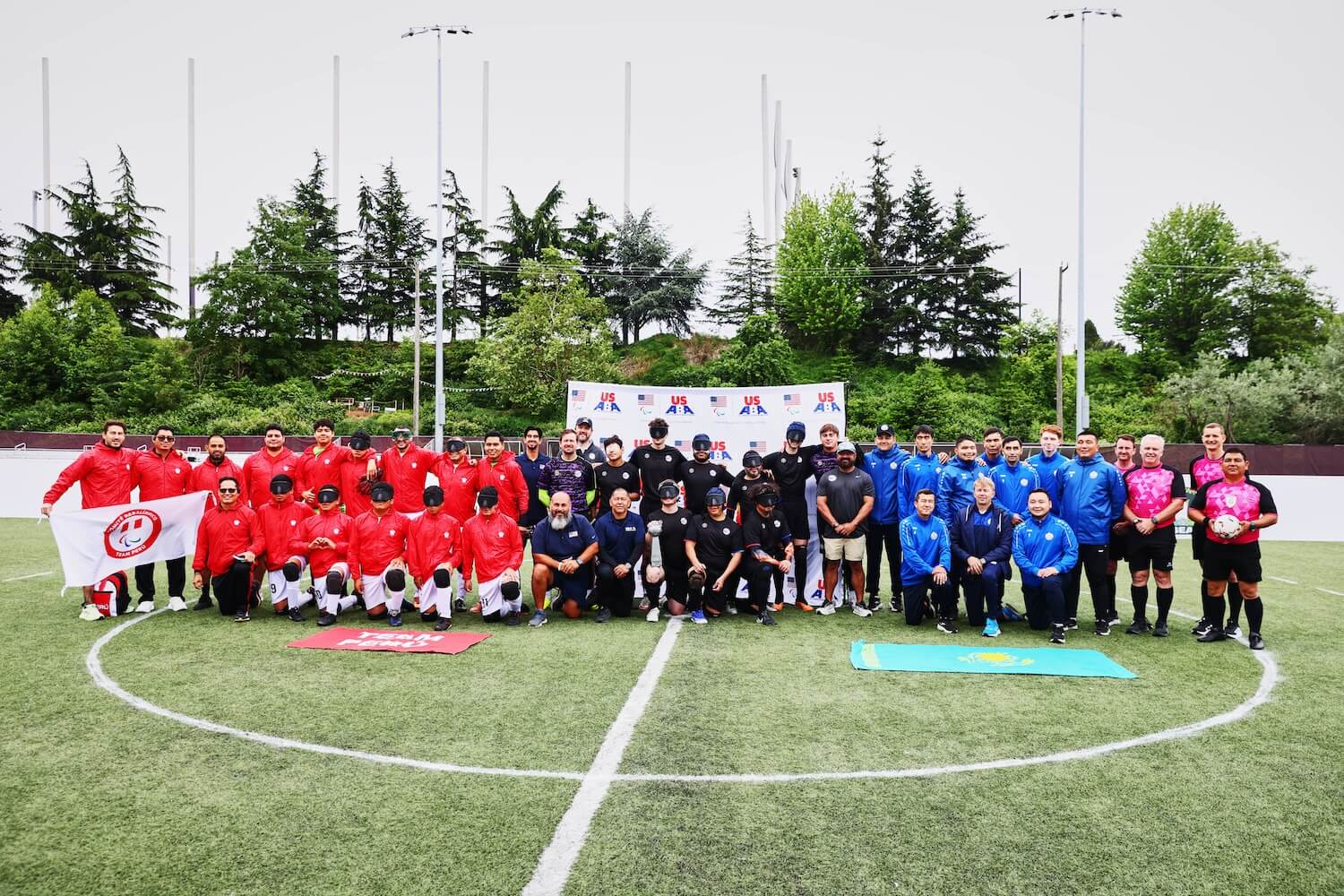
The emotional weight of the sport reached a pinnacle during the Inaugural International Blind Soccer Tournament at Interbay Stadium in May of 2026. Facing fierce competition from Kazakhstan and Peru, Catherine felt the raw pressure of the moment. He vividly remembers the pain of a stinging 4-0 loss to Peru. “After the 4-0 (loss to Peru), I felt terrible about myself, and I was almost ready to cry. I was embarrassed,” Catherine admitted. Yet, the Seattle crowd's reaction changed how he saw things. “Instead, people (in the crowd) were like, ‘You guys are awesome.’ And that was what we needed before the second game,” he recalled. This experience underscored the growing awareness and support for the sport in the Pacific Northwest.
Catherine also remembers the earlier days of the program, reflecting on the struggle to build something out of nothing. He recalls memories of being on the bench and, unfortunately, having a hard time winning matches. These moments of helplessness built the foundation of his mental toughness. Looking at the progress made, he observes, "We started from absolute scratch, which is why a game like today’s is massive." He credits his time with the national team for fostering "resilience and the pride of representing the country," qualities that have changed him both as an athlete and as a person.
As the U.S. looks toward the LA28 Paralympics—which will mark the team's Paralympic debut—Catherine’s role as captain is about more than just winning, it is about advocacy. He is acutely aware that many visually impaired people might feel the same hesitation he once did. His mission aligns with the USABA's goal to build a lasting infrastructure so that when a child with a visual impairment searches for the sport, they find a regional hub where they can participate. His advice to them is born from his battle with introversion and the challenges of the pitch: "It’s not easy, but you have to stay positive and not be afraid to show yourself to the world." Through his leadership, Catherine is proving that the field is a place of empowerment, where the only thing louder than the rattling ball is the voice of an athlete who refused to stay in the shadows.

